
Summary: in this tutorial, you will learn about PostgreSQL foreign key and how to add foreign keys to tables using foreign key constraints. A foreign key is a field or group of fields in a table that uniquely identifies a row in another table. In other words, a foreign key is defined in a table that references to the primary key of the other table. A table can have at most one primary key. There can be any number of unique and not-null constraints, which are functionally almost the same thing, but only one can be identified as the primary key.
Relational database theory dictates that every table must have a primary key. This rule is not enforced by PostgreSQL , but it is usually best to. Currently, only UNIQUE, PRIMARY KEY , EXCLUDE, and REFERENCES (foreign key ) constraints accept this clause. NOT NULL and CHECK constraints are not deferrable. INITIALLY IMMEDIATE INITIALLY DEFERRED.
PostgreSQL automatically creates an index for each unique constraint and primary key constraint to enforce uniqueness. Ask Question Asked years, months ago. What would be the correct way of creating the foreign key in postgresql please?
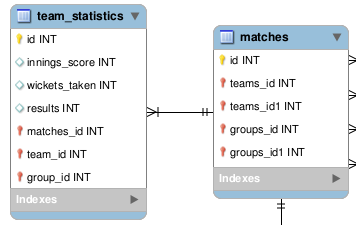
If the FK references a primary key , no columns are needed. I have users table in my PostgreSQL 9. A primary key is a column or a group of columns used to identify a row uniquely in a table.


